
I was just on TV talking about something that catches a lot of Chicago families off guard — the hidden costs of a Disney World trip. And with summer travel season coming up fast, this is exactly what you need to know before you book, because these extras can quietly add hundreds to a trip you thought you had budgeted for.
Last Updated: April 2026
In a Nutshell
- Lightning Lane: $15–$45 per person, per day — up to $180+ for a family of four at Magic Kingdom.
- Food & drinks: $50–$100 per person, per day without careful planning.
- Ride share: $15–$30 per trip if you skip Disney’s free transport.
- Souvenirs: $50–$200+ per trip — easily controlled with one simple strategy.
- Bottom line: A Chicago family of four can spend $300–$700 more than expected without a plan.
I cover family travel for Chicago regularly, and Disney is one of the most common trips I get asked about. The biggest mistake I see? Families budget for tickets and hotels — but not the extras. Here’s the full breakdown of what to watch for, and exactly how to avoid it.
1. Lightning Lane: The Biggest Budget Shock
This is the one that surprises Chicago families the most — and I completely understand why. Disney used to offer FastPass for free. You’d reserve a return time for a popular ride, skip the standby line, and it cost you nothing extra. That system is gone. It was replaced by Lightning Lane, which is the exact same concept — but now you pay for it every single day.
There are two tiers. Lightning Lane Multi Pass runs $15–$45 per person per day depending on the park and how busy it is. Magic Kingdom and Hollywood Studios cost more; peak summer days hit the high end. On top of that, the most popular individual rides — think Tron at Magic Kingdom or Guardians of the Galaxy at EPCOT — require a separate Lightning Lane Single Pass at $10–$25 per person per ride.
Do the math for a Chicago family of four at Magic Kingdom on a peak summer day: Multi Pass alone runs $180. Add two Single Pass rides and you’re looking at $240+ just to skip lines — before lunch.
How to save: You don’t need Lightning Lane every day. Skip it entirely at Animal Kingdom, where lines move faster and the park is less intense. Save it for Magic Kingdom and Hollywood Studios only. And use the rope drop strategy — arrive right when the park opens and ride the top two or three attractions before the crowds build. Most mornings, you won’t need Lightning Lane at all before 11am.
2. Food and Drinks Add Up Faster Than You Think
Disney is engineered to make spending feel frictionless — food carts every fifty feet, mobile ordering at your fingertips, tap-to-pay so you never actually feel the money leaving. A casual day of eating at Disney can easily hit $100 per person without anyone making a single extravagant choice.
A morning latte runs $7–8. A margarita at EPCOT’s Mexico Pavilion is pushing $20. One afternoon snack for a family of four — $30 to $40, gone in minutes. And if you’re on the Disney Dining Plan, watch out: tips and gratuity are not included, and you’re looking at 18–20% on top of every table service meal.
How to save: Load a Disney gift card with your daily food budget before you walk in. When the card is empty, you’re done — it turns invisible tap-to-pay spending into a hard, visible limit. Bring snacks from home (protein bars, trail mix, fruit pouches) to kill the mid-morning impulse buy. And use mobile ordering strategically: you decide what you’re spending before you’re standing hungry in front of a menu board.
3. Transportation: Free Exists, But Families Don’t Always Use It
Here’s something a lot of first-time Disney visitors don’t know: Disney offers completely free transportation between your resort hotel and the parks. Buses, the Skyliner gondola, the Monorail, and boats — all included, all free. This is hotel-to-park and park-to-park transport only (you walk inside the parks themselves), but it covers everything you actually need.
The catch is timing. At peak hours — first thing in the morning and last thing at night — the buses get brutal. Long lines, packed vehicles, 45-minute waits. That’s when exhausted families pull out Uber, and at $15–$30 one way, it adds up fast. Disney’s own Minnie Van service through the Lyft app runs $30–60 one way. A family doing this twice a day for five days can spend $150–300 in unexpected transportation costs.
How to save: The Skyliner gondola is the best-kept secret on Disney property — almost no wait, connects EPCOT and Hollywood Studios area resorts, and genuinely fun to ride. Leave the parks 20 minutes before the crowds and free transport is completely manageable. If you know you’ll want the convenience of ride share on at least one long night, budget $30 for it upfront so it doesn’t blindside you.
4. The “Forgot to Pack It” Tax
You pack carefully. You make a list. And then you open your suitcase at the hotel and realize the sunscreen is sitting on your bathroom counter back home. Everything you forgot to pack costs significantly more inside Disney parks — sunscreen, ponchos, pain relievers, band-aids. The markup on basic drugstore items inside the parks is real, and it hits hardest when you need something urgently.
How to save: Make your packing list two weeks before the trip, not the night before. Include a “Disney day bag” checklist: sunscreen, ponchos, pain reliever, portable charger, snacks, and any medications. If you realize you’ve forgotten something after landing in Orlando, order it to your hotel via Instacart before you even get there — far cheaper than buying it in the park.
5. Your Phone Will Die — and Disney Charges for That
Your phone is your Disney command center from the moment you walk in: Lightning Lane bookings, mobile food ordering, wait times, PhotoPass ride photos, park maps, and family communication all run through it. Most phones are dead by early afternoon. Disney has FuelRod charging stations throughout the parks — but the initial unit costs $40, with a $80 option for higher capacity.
How to save: Bring a portable charger from home. A solid one runs $20–30 on Amazon and pays for itself on day one. This is one of the easiest wins on the whole list — pack it, charge it the night before, and never think about it again.
6. Souvenirs: Where Family Budgets Go to Die
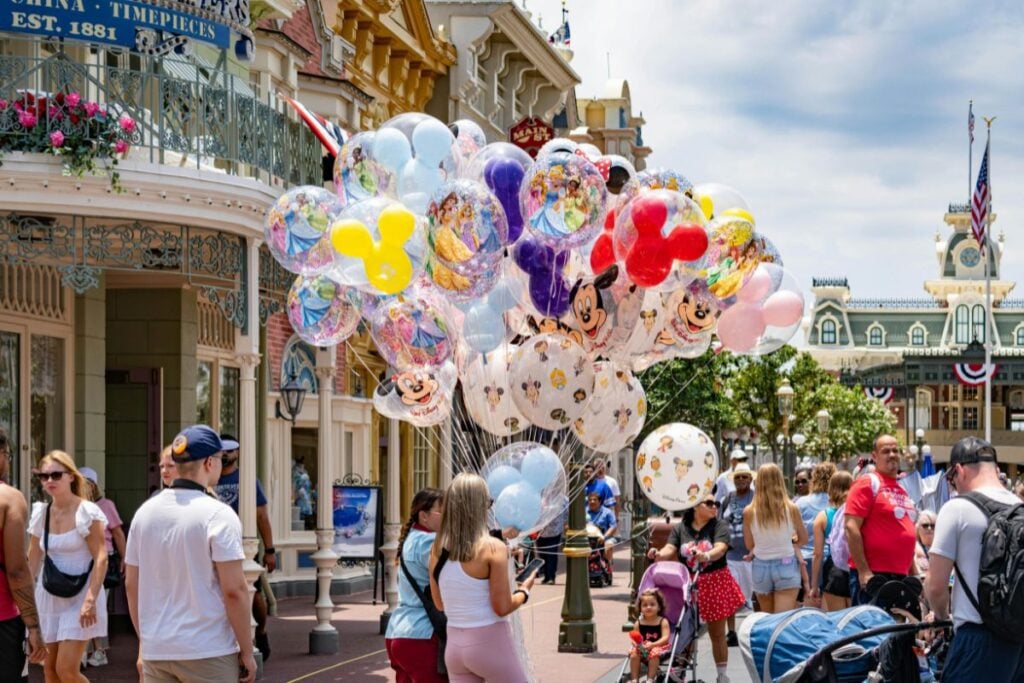
This is where most families completely lose control of their budget — not because they’re careless, but because Disney is very good at creating the perfect emotional conditions for impulse buying. Light-up toys appear at exactly the right moment at night. Character merchandise sits right outside every major ride exit. Kids are tired, happy, and asking. Light-up toys run $20–40 each. Character merchandise starts at $30 and goes up fast.
Here’s what actually works: buy the basics before you leave Chicago. Mickey ears, Disney character shirts, autograph books, and ponchos are all available on Amazon, at Target, and on ShopDisney.com for 40–60% less than park prices. Let the kids pick out their ears and shirts before the trip — it builds excitement and eliminates the in-park negotiation entirely.
How to save: Set a per-kid souvenir budget before you leave home — $30–40 each — and put it on a Disney gift card so there’s a hard limit. Use the last-day rule: kids can only buy their in-park souvenir on the final day of the trip. They spend a week comparing everything, and they almost always end up buying less and being happier with what they chose.
7. The Gift Card Strategy: The Smartest Disney Budget Trick
I’ve mentioned gift cards a few times already — and that’s intentional, because this is genuinely the single most effective Disney budgeting tool I know. Load a set amount onto a Disney gift card for each spending category at the start of the trip: one for food, one per kid for souvenirs. When it’s gone, it’s done. No exceptions, no negotiations.
It works because it makes invisible spending visible. Tap-to-pay at Disney is designed to feel like nothing — a gift card with a balance that visibly decreases makes the spending real. Kids who have their own card learn to make decisions instead of just asking. And there’s a bonus tip for the planners in the room: buy Disney gift cards at Target with a Target RedCard and get 5% off instantly — saving money before the trip even starts.
Download My Free Family Travel Budget Checklist
I put together a simple, printable travel budget checklist I use when planning trips — including Disney — so nothing catches you off guard. It covers hidden fees, a daily budget planner, and a packing list to avoid overpaying inside the parks.
It’s free. Download it here. Perfect for Disney trips, spring break, and summer vacations — any trip where you want a plan before you spend.
More Chicago Family Travel Guides
If you’re a Chicago family planning trips this year, these guides will help you make the most of every dollar — close to home and beyond.
- Spring Break in Chicago with Kids: 20+ Family Activities
- 3-Day Chicago Spring Break Itinerary for Families
- 15 Best Weekend Getaways from Chicago
- Planning a Trip to Chicago: Local Tips and Insider Advice
Disney is still one of the most memorable trips you can take with your family — the magic is real, and it’s worth every bit of planning it takes. You just need to walk in with your eyes open. A little preparation before you leave Chicago can easily save your family $300–$500 on a single trip.