
🏙️ QUICK ANSWER: Moving to Chicago means getting a truly cosmopolitan city — world-class museums, legendary theater, top-tier universities, stunning architecture — at Midwest prices. Yes, winters are cold, but living on the shores of Lake Michigan with 26 miles of free public beaches and lakefront trails is a trade-off most Chicagoans happily make. The keys to a smooth transition: invest in serious winter gear before winter hits, learn the parking sign rules immediately, understand that public transit is excellent for getting downtown but transfers take longer than you’d expect, and pick your neighborhood carefully — it matters more here than almost anywhere else.
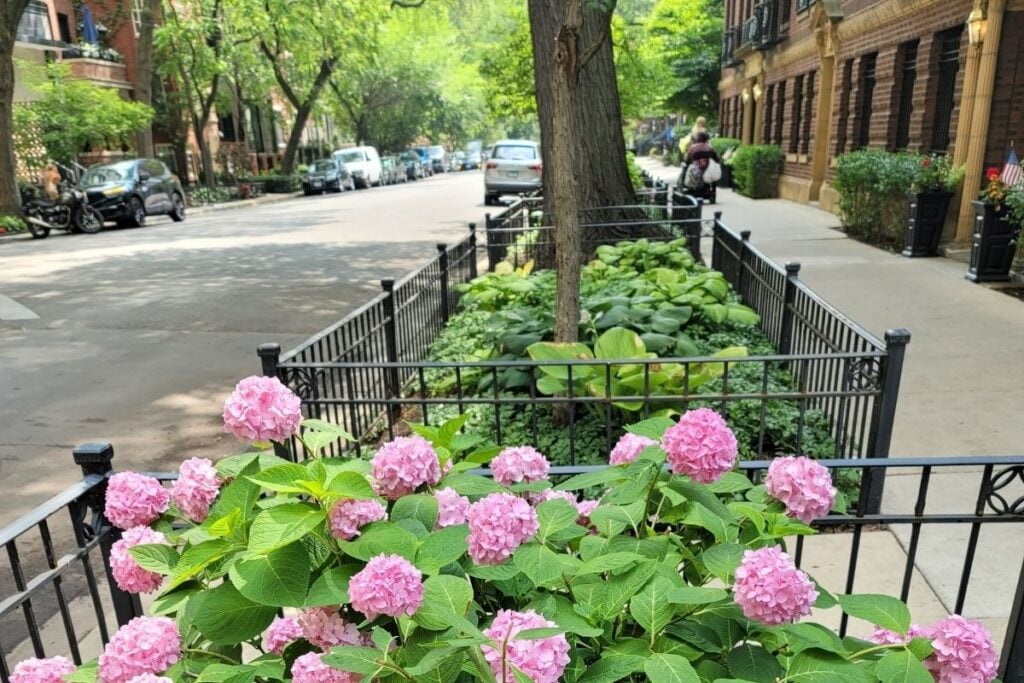
I’ll be honest — when most people think about moving to Chicago, they picture deep-dish pizza, the Cubs, and maybe a vague sense that Chicago winters are cold. But actually living here? That’s a different story, and one that most relocation guides skip right over.
I’ve spent years exploring this city and talking to people who’ve made the move from all over — New York, LA, small-town Midwest, you name it. And the things they wish they’d known? Not always the stuff you’ll find in the standard “cost of living” breakdowns.
So here’s what you actually need to know before moving to Chicago — the practical stuff, the surprising stuff, and the things that will make you fall in love with this city (and avoid some expensive mistakes along the way).
Table of contents
- The Cost of Living: What You’ll Actually Pay
- Winter: It’s Not a Myth, But It’s Survivable
- Getting Around: The CTA Is Your Friend (Mostly)
- If You’re Bringing a Car: Read This Carefully
- Picking a Neighborhood: This Matters More Than You Think
- The Social Scene: Chicago Is a Drinking Town
- The Job Market: Why People Actually Move Here
- Things That Will Surprise You (in a Good Way)
- Things That Might Frustrate You
- Insider Tips from People Who Made the Move
- Final Thoughts: Is Chicago Right for You?
The Cost of Living: What You’ll Actually Pay
Let’s start with the question everyone asks first: Can I afford to live in Chicago?
The short answer is probably yes, especially if you’re coming from another major city. Chicago’s cost of living runs about 7-20% higher than the national average, depending on which study you check — but compared to New York, San Francisco, or Los Angeles, it feels almost reasonable. A one-bedroom in Manhattan averages over $5,000/month. In Chicago? You’re looking at $1,800-$2,600 for a decent one-bedroom, and you can find deals in solid neighborhoods for even less.
💰 CHICAGO RENT: IT DEPENDS ON THE NEIGHBORHOOD
Rent in Chicago varies dramatically by neighborhood — more than almost any other major city. You could pay $900 for a 1-bedroom on the Far Southeast Side or $3,500+ in Fulton Market. Here’s a general range:
📍 Budget-friendly areas (Albany Park, Pilsen, Avondale, Rogers Park): $1,100-$1,500/month for 1BR
📍 Mid-range neighborhoods (Lakeview, Lincoln Square, Logan Square): $1,600-$2,200/month for 1BR
📍 Premium neighborhoods (West Loop, River North, Fulton Market, Gold Coast): $2,500-$3,500+/month for 1BR
Prices fluctuate seasonally and week to week — always check current listings.
Beyond rent, here’s what catches people off guard: Chicago’s sales tax is 10.25% (ouch), property taxes average around 2.27% (also ouch), and the state income tax is a flat 4.95%. The tax situation isn’t pretty, but you’ll offset a lot of it compared to what you’d pay for equivalent housing in coastal cities.
Utilities run about $150-$250/month for a typical apartment, though heating costs spike in winter. Budget accordingly — January gas bills are not for the faint of heart.

Winter: It’s Not a Myth, But It’s Survivable
I’m going to be straight with you: Chicago winters are no joke. January temperatures average around 22°F, and wind chill off Lake Michigan can make it feel much, much colder. Snowfall averages about 37 inches per year, and winter doesn’t just happen in December — it starts creeping in by late October and can linger well into April.
But here’s what longtime residents will tell you: the quality of your winter jacket and boots directly correlates to how much you hate winter. One Chicago transplant put it perfectly — he spent five years suffering through winters in a mediocre Macy’s jacket before finally investing in a proper down coat. Now? Winters barely faze him.
❄️ PRO TIP: Buy your heavy-duty winter coat and waterproof boots before winter hits — not during the first cold snap when everyone else is panic-shopping and prices are jacked up. Chicagoans don’t care if they look like overstuffed Michelin men. Function over fashion, always.
The secret to surviving (and even enjoying) Chicago winters is layering. Chicagoans have turned it into an art form. Base layer, insulating layer, weatherproof outer layer — that’s the formula. And honestly, once you have the right gear, winter unlocks its own magic: ice skating in Millennium Park, cozy bar crawls, the way the city looks dusted in fresh snow before the plows come through.
If you’re coming from NYC, one important distinction: a bad winter in Chicago doesn’t just mean colder temperatures. It means the cold starts earlier and lingers longer. That’s what gets people.
And here’s the thing — those brutal winters buy you something incredible: summer on Lake Michigan. 26 miles of public beaches, free swimming, the lakefront trail for biking and running. Most Chicagoans consider it a fair trade.
And if you’re working in the Loop, here’s an insider secret: the Chicago Pedway is a network of underground tunnels connecting transit stations, office buildings, and retail spaces downtown. You can walk from the train to your office without ever stepping outside in January. Not every building is connected, but once you learn the routes, winter commuting gets a lot more tolerable.

Getting Around: The CTA Is Your Friend (Mostly)
Chicago’s public transit — operated by the CTA — is genuinely excellent, especially if you’re used to having no transit options at all. The ‘L’ train system and bus network will get you almost anywhere in the city, and you can absolutely live car-free here if you choose your neighborhood wisely.
But here’s what surprises a lot of newcomers: all the train lines are really good at getting you downtown first and foremost. If you want to go from, say, Lincoln Park to Logan Square, or from Lakeview to Pilsen? You’re looking at transfers and 40-50 minute commutes for trips that seem like they should be quick.
🚇 CTA FARES (as of February 2026)
📍 Single bus ride: $2.50
📍 Single train ride: $2.75
📍 7-day unlimited pass: $25
📍 30-day unlimited pass: $85
📍 Day pass: $6
Pay for rides through the Ventra app — you can load passes, pay with a card, and avoid having to dig for cash. The app tells you when the next train or bus is coming, which becomes essential in winter when you’re timing your departure to minimize time spent waiting on an outdoor platform.
One major advantage Chicago has over many cities: easy public transit connections to both airports and the suburbs. The Blue Line runs directly from downtown to O’Hare International Airport — no $50 cab ride, no shuttle headaches, just a $2.75 train fare and about 45 minutes. Midway Airport connects via the Orange Line. And if you’re commuting from the suburbs or exploring beyond city limits, Metra commuter rail serves the entire Chicagoland region with lines radiating out in every direction. You can live in Naperville, Evanston, or Oak Park and still get downtown without a car.
One thing that’s genuinely wonderful: Chicago has invested heavily in bike infrastructure. Divvy bike-share stations are everywhere, and dedicated bike lanes make cycling a legitimate commute option from roughly April through October. Many Chicagoans ditch transit entirely during summer months and bike everywhere.
If You’re Bringing a Car: Read This Carefully
This is where so many newcomers get burned, so pay attention: Chicago parking enforcement is ruthless. The parking signs, the street cleaning schedules, the snow routes, the residential permit zones — it’s a lot, and the city will absolutely ticket and tow you for violations.
🚗 WHAT CAR OWNERS MUST DO:
✓ Register your car in Illinois
✓ Get new license plates and tags
✓ Buy a Chicago city sticker (required annually, around $90-$150)
✓ Get a residential parking permit if your neighborhood requires one
✓ Download a parking app (SpotHero, ParkChicago) to pay for meters remotely
Here’s wisdom from people who learned the hard way: if you ever question whether you can park in a lot and you aren’t 100% sure, don’t park there. Lot owners are quick to boot or tow, and getting your car back is expensive and infuriating.
And then there’s dibs. Here’s a Chicago tradition that will confuse you until you live through your first big snowstorm: after shoveling out your parking spot, Chicagoans “claim” it by placing chairs, cones, laundry baskets, or whatever else they have on hand in the cleared space. This is called dibs, and opinions on it are… strong. Some people consider it sacred — you shoveled, you earned it. Others think it’s ridiculous and refuse to participate.
What you need to know as a newcomer: if you move someone’s dibs markers and take their spot, expect anything from a nasty note to a keyed car to something worse. Whether you agree with the practice or not, don’t mess with someone’s dibs until you understand the unwritten rules of your specific block. When in doubt, keep driving.
Monthly parking downtown can exceed $250. Between parking, gas (hovering around $4/gallon), insurance ($1,200-$1,800/year), and the general headache of city driving, many Chicagoans eventually ditch their cars entirely. That $85/month CTA pass starts looking pretty good.
One more thing: pay zero attention to the distance from where you live to where you work as an indicator of commute time. Traffic, especially on the north side, is horrible. Construction is eternal. What looks like a quick trip on the map might be an hour in your car during rush hour.

Picking a Neighborhood: This Matters More Than You Think
Chicago is a city of 77 neighborhoods, and they are genuinely different from each other — not just in price, but in personality, walkability, nightlife, and overall vibe. Where you live will shape your entire Chicago experience.
You’ll never run out of places to explore. Each neighborhood has its own personality, food scene, architecture, and vibe. You could visit a new neighborhood every weekend for a year and still have more to discover. Dim sum in Chinatown on Saturday, tacos in Pilsen on Sunday, Swedish bakeries in Andersonville the next week, Polish delis in Avondale after that. The city keeps revealing itself the longer you live here, and that sense of discovery never really goes away.
Here’s a quick breakdown by lifestyle:
For Young Professionals
- Lincoln Park — Vibrant social scene, excellent access to bars, restaurants, and public transit. Home to the free Lincoln Park Zoo and beautiful lakefront. Higher rent, but you’re paying for convenience and atmosphere.
- Wicker Park — Trendy, artistic, full of boutiques and cafes. Great for creatives and young professionals who want to be where things are happening.
- Logan Square — The hipster haven with artsy flair, excellent nightlife, and a strong sense of community. Connected by the Blue Line, which runs to O’Hare — handy for frequent travelers.
- River North — Upscale nightlife, gallery scene, and proximity to downtown offices. More expensive, more polished.
- West Loop — The foodie paradise. Restaurant Row is here, along with chic condos and a bustling feel. Popular with professionals who want to walk to excellent restaurants.
- The Loop, South Loop and Printer’s Row – Grant Park, theaters, restaurants and shopping all at your fingertips make the loop attractive. You’ll find many of high-rises with varying price points here, offering a wide range of amenities, too.
For Families
- Beverly — Quiet, suburban feel with highly rated schools. A real neighborhood where people know their neighbors.
- Edison Park — Family-friendly with a strong community vibe, safe streets, and good schools. Near O’Hare, which is a plus or minus depending on your perspective.
- North Center — Parks, good schools, and a balanced urban-suburban feel. Popular with young families who want city life without the chaos.
- Lakeview — Family-friendly pockets with lakefront access and good parks. Home to Wrigley Field, so expect game-day crowds in season.
Budget-Friendly Options
- Albany Park — Diverse, affordable, and increasingly popular. Great food from around the world at reasonable prices.
- Pilsen — Artistic, culturally vibrant, comparatively affordable (though gentrifying). Amazing Mexican food, murals everywhere, strong sense of identity.
- Avondale — Offers good value with access to trendy amenities. An up-and-coming spot that’s attracting younger residents priced out of neighboring areas.
Upscale Living
- Gold Coast — Historic mansions, elite boutiques, proximity to the lake. Old-money Chicago vibes.
- Streeterville — Lakefront views, luxury high-rises, walking distance to the Magnificent Mile.
🏡 PRO TIP: Before signing a lease, visit the neighborhood at different times of day — morning commute, evening, weekend. Walk around. Check transit access. See where the closest grocery store is. Neighborhoods that seem great online can feel very different in person.

The Social Scene: Chicago Is a Drinking Town
I want to mention this because it genuinely surprised some people I’ve talked to: Chicago has a strong drinking culture. A lot of social interaction, especially in winter, happens at bars and restaurants. Grabbing drinks after work, meeting friends at a neighborhood pub, brewery hopping on weekends — it’s woven into the social fabric here.
If you don’t drink, Chicago can still absolutely work for you. The city is increasingly open to people showing up to drinking-heavy events and staying sober — the virgin cocktail options at most good bars are actually impressive these days. But it’s worth knowing upfront that if you prefer socializing without alcohol, you might need to be more intentional about finding your community.
On the flip side, if you do enjoy a drink, Chicago is incredible. Start with a shot of Malört (the unofficial spirit of Chicago, and yes, it’s terrible, and yes, you have to try it) and go from there. The craft beer scene is outstanding, the cocktail bars are world-class, and every neighborhood has its own beloved dive.

The Job Market: Why People Actually Move Here
Chicago’s economy is seriously diversified, which is one of its biggest strengths. Major industries include finance, healthcare, logistics, manufacturing, tech, and hospitality. The Chicago Mercantile Exchange, several Fortune 500 headquarters, and a growing tech scene mean there are opportunities across a wide range of fields.
Major employers include Boeing, United Airlines, McDonald’s, Abbott, Walgreens, and countless financial services firms. If you’re in finance, consulting, healthcare, tech, or logistics, you’ll find plenty of opportunities. The Loop and surrounding areas (River North, West Loop, Streeterville) offer the densest concentration of corporate jobs.
Average salaries range widely — administrative roles might pay around $55,000, while IT and finance positions often exceed $100,000-$120,000. The job market has remained relatively strong, and Chicago’s lower cost of living compared to coastal cities means your salary stretches further here.
Things That Will Surprise You (in a Good Way)
Here’s what catches people off guard — in the best way:
It’s a cosmopolitan city that happens to be in the Midwest. Chicago isn’t just a “big city” — it’s home to the Art Institute (one of the best art museums in the world), the Steppenwolf and Goodman theaters (where countless Broadway shows originate), the Chicago Symphony Orchestra, and universities like the University of Chicago and Northwestern. The Field Museum, Shedd Aquarium, and Museum of Science and Industry are world-renowned. You’re not trading culture for affordability here — you’re getting both.
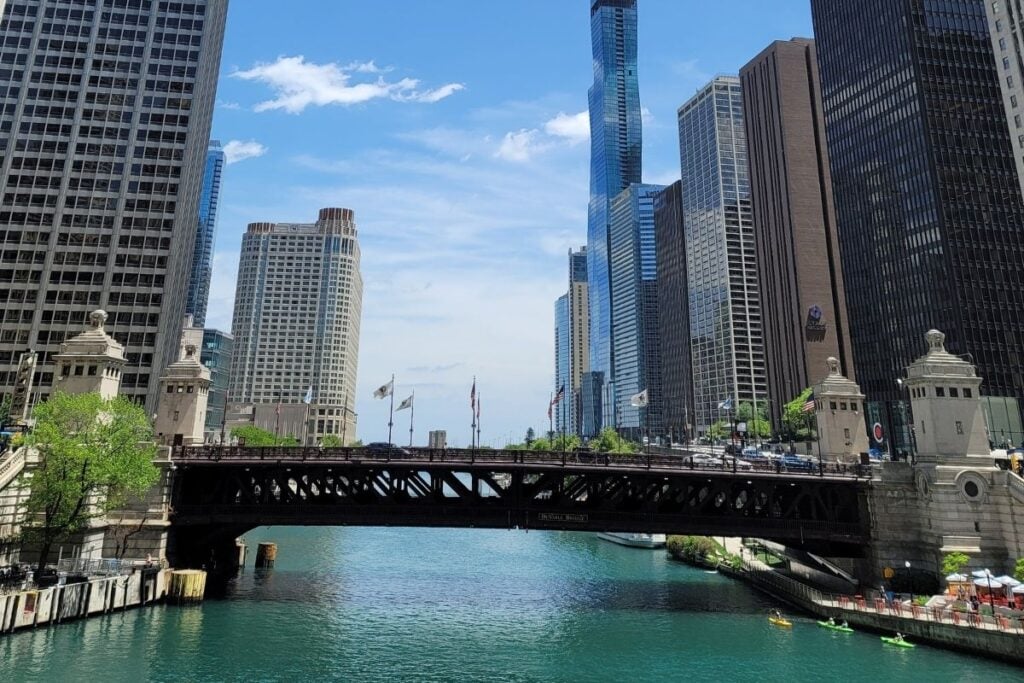
The architecture will stop you in your tracks. Chicago is the birthplace of the skyscraper and home to some of the most iconic buildings in the world — the Willis Tower, the Wrigley Building, Marina City, the Aqua Tower. Frank Lloyd Wright’s Prairie-style homes dot the neighborhoods. Even everyday buildings have details you’d miss in other cities. Take an architecture boat tour on the Chicago River at least once — it’s touristy, yes, but locals do it too because it’s genuinely that good.
The food scene is genuinely world-class. Yes, everyone knows about deep-dish pizza and Chicago-style hot dogs. But the restaurant scene goes so much deeper — incredible Mexican food in Pilsen, Vietnamese in Argyle, fine dining in the West Loop, Italian beef sandwiches that will change your life. You will eat well here.
People are friendly because they’re proud of their city. Midwestern friendliness is real, but in Chicago it’s more than that — people genuinely love this city and want you to love it too. Ask for a restaurant recommendation and you’ll get a passionate five-minute answer. Mention you just moved here and people light up. There’s a civic pride that runs deep, and it makes the whole city feel more welcoming. Chicagoans aren’t friendly despite living in a big city — they’re friendly because of the city they live in.
The energy is real. Chicago has a pulse you can feel — there’s always something happening, whether it’s a street festival, a new restaurant opening, a pop-up market, or just the hum of a city that’s fully alive. It’s big enough to have world-class everything, but not so overwhelming that you lose yourself in it. People here are ambitious but approachable, the neighborhoods have genuine character, and there’s an excitement to daily life that’s hard to explain until you experience it. It’s the kind of city that makes you want to say yes to things.
You can still have space. Unlike Manhattan or San Francisco, finding a decent-sized apartment at a reasonable price is actually possible. Neighborhoods like Portage Park and Jefferson Park offer the kind of space that simply doesn’t exist in most major cities.
Summer is magic. After surviving winter, Chicagoans don’t take summer for granted. The city explodes with festivals, street fairs, beach days, outdoor concerts, and rooftop bars. It’s genuinely one of the best summer cities in America.
The lakefront is yours — and it’s a lifestyle. 26 miles of public beaches, trails, parks, and swimming — completely free, completely public. In most coastal cities, waterfront access is exclusive or expensive. In Chicago, it belongs to everyone. This isn’t a “nice to have” — for most Chicagoans, it’s why the winters are worth it.
Things That Might Frustrate You
In the interest of honesty:
- Taxes are high. Sales tax, property tax, various city fees — you’ll feel it.
- Crime exists and varies by neighborhood. Some areas have higher crime rates than others. Do your research before choosing where to live. Neighborhoods like Lincoln Park, Edison Park, Lakeview, and the Gold Coast are generally very safe. Other areas require more awareness.
- Traffic is brutal. If you’re driving during rush hour, prepare yourself. The Kennedy, the Eisenhower, Lake Shore Drive — they’re all parking lots at peak times.
- You’ll spend more money having access to things. One transplant summed it up perfectly: “I used to eat out once a week. Now it’s 2-3 times because it’s so easy to just pop out and grab something.” The convenience of city life adds up.
- Bodegas aren’t really a thing. If you’re coming from NYC, the corner store culture is different here. You’ll adapt, but it’s an adjustment.
Insider Tips from People Who Made the Move
These are straight from Chicagoans who wish they’d known earlier:
- Get to know your alderman. Local politics matter here. Your alderman can help with parking permits, neighborhood concerns, and a surprising number of quality-of-life issues.
- Join a neighborhood Facebook or Nextdoor group. It’s the fastest way to get recommendations, learn about local events, and figure out the lay of the land.
- Practice your “don’t talk to me” face for the ‘L’. Not everyone on the train wants to chat. You’ll develop the neutral city expression eventually.
- If you’re moving, book movers early — especially in summer. Peak moving season means everyone’s competing for the same trucks and crews.
- Spring and fall are the best times to move. Better rates, temperate weather, and fewer people competing for apartments.
Final Thoughts: Is Chicago Right for You?
Chicago is a city that rewards you for choosing it. It’s not always easy — the winters are real, the taxes are high, and there’s a learning curve to the parking rules that might cost you a few tickets before you get it down.
But the payoff? A cosmopolitan city with world-class museums, theater, and universities. Stunning architecture around every corner. 26 miles of free lakefront beaches. 77 neighborhoods with real personality, each one worth exploring. Food that will ruin you for other cities. And an energy and excitement that makes you actually want to get out and do things — not just survive, but live.
The people I talk to who made the move? They all say some version of the same thing: “I wish I had moved here earlier.”
Welcome to Chicago. Bundle up, download the Ventra app, and get ready to fall in love with a city that’s going to feel like home faster than you’d expect.
Planning a trip to Chicago before you move? Check out our guides to Chicago’s best neighborhoods, free things to do in Chicago, and where to eat.
If you book through our links, we may earn a small commission at no extra cost to you. Thanks for supporting Little Chicago Guide!